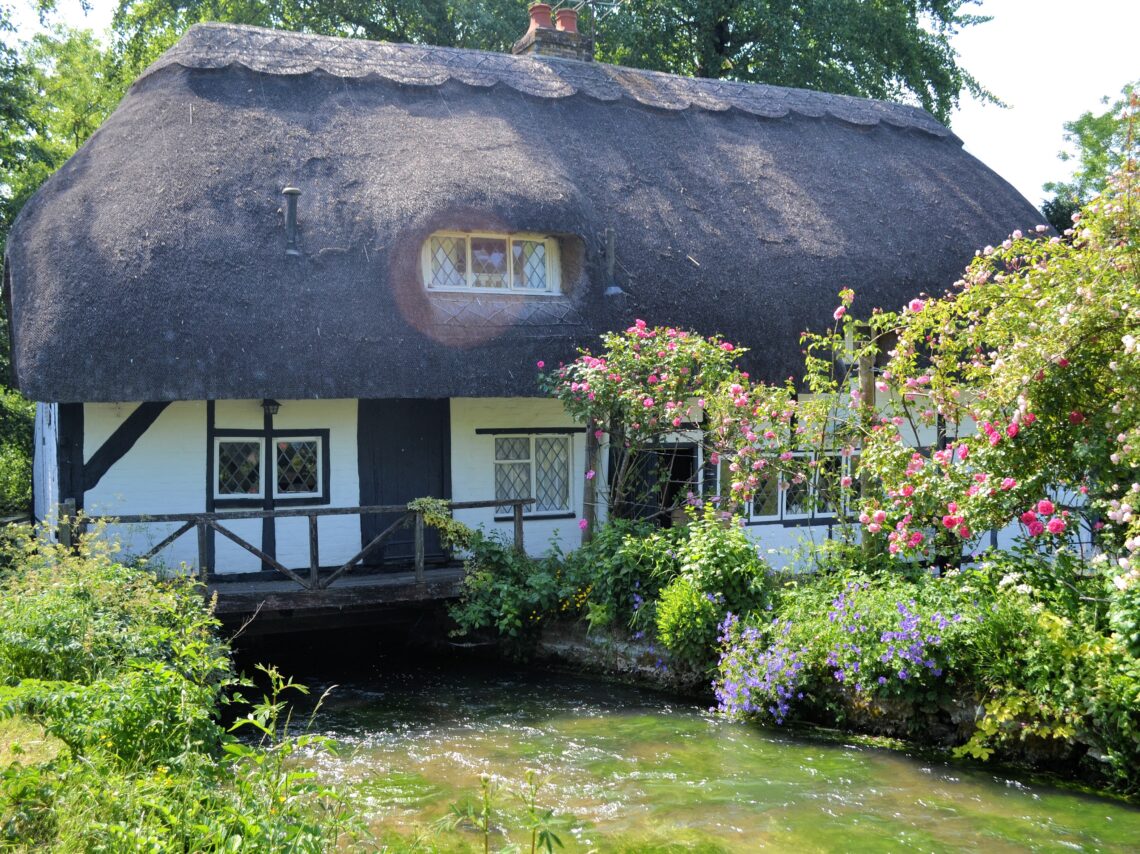
10 Things About English Homes That Confused Me at First
When I first moved to England, I expected the language, weather and British sense of humour to take some getting used to. Well, the accent did for sure.
But there were plenty of other things I wasn’t expecting — including some of the features of English homes.
Where I grew up, houses were arranged and built quite differently, so some things that seemed completely normal here were new to me. Some I have grown to love, some we have changed in our own home, and others still make me wonder why they are done this way.
After more than 10 years of living in England, these are some of the things about English homes that stood out to me when I first arrived.
Table of Contents
1. The Carpets
One of the things I noticed quite quickly was how much carpet is used in English homes.
Where I grew up, I was much more familiar with tiled flooring in bathrooms and hallways, and wooden flooring covered by carpets in the rooms. In England, however, you can find fitted carpet in living rooms, bedrooms and, very commonly, on the stairs.
I had never seen carpeted stairs in my life before moving here.
At first, I found the idea quite strange. I was much more used to hard flooring, particularly surfaces that could be easily cleaned and disinfected, but I understand why people like carpeted stairs now. They are quieter, warmer and can make a house feel cosy. I also think carpeted stairs can be safer, as they provide more grip than some smooth, hard surfaces.
My feelings about carpet elsewhere in the house are a little different.
In one of the homes we lived in, the living room had a stained,fluffy carpet, and it wasn’t something that could simply be removed and properly cleaned. We spoke to the landlord, and eventually it was replaced with wooden flooring. For me, that was much better.
There is something warm and cosy about carpet under your feet, especially in winter, but when I think about cleaning it properly, I still prefer hard flooring with a carpet or rug that can be easily removed and washed.
2. The Hot and Cold Tap Situation
This is probably one of the things people notice most when they first encounter a traditional English bathroom.
Some older English homes have separate hot and cold taps on the bathroom sink rather than one mixer tap.
I remember noticing this and thinking that it was a rather unusual way of doing things.
You have hot water coming from one tap and cold water from the other, rather than being able to adjust the temperature with one handle.
Of course, not every English home has this. Modern bathrooms often have mixer taps, and we changed ours too.
Still, seeing those separate taps was one of those small details that made me realise that even something as ordinary as washing your hands can be done differently from one country to another.
3. The Washing Machine
Another thing that surprised me when I first moved to England was seeing the washing machine in the kitchen.
I was more familiar with having laundry in a separate area or room, but in England, particularly in smaller or older homes, the kitchen often has to serve several purposes.
Once you understand how limited space can be in some English houses, it makes much more sense.
After living here for more than 10 years, I don’t even think twice about it anymore. It is simply part of everyday life.
4. The Utility Room
There are homes with a utility room — something I have come to appreciate.
A utility room gives you somewhere to put the washing machine, tumble dryer, cleaning products, laundry and all those practical household items that you don’t necessarily want taking over the kitchen.
It might not be the most exciting room in the house, but it can make everyday life much easier.
I think this is one of the things I’ve learned from living in England: practical storage space is incredibly valuable.
5. The Bathrooms
English homes can have plenty of character, but they can also be very creative when it comes to making use of space.
Some bathrooms, particularly in older houses, can be surprisingly compact.
You might have a toilet, sink and shower squeezed into a space that seems tiny compared with what you are used to.
There are also downstairs toilets or small cloakrooms that have been fitted into spaces you might not initially think could accommodate a bathroom.
At first, I found some of these spaces rather unusual.
Now I mostly see them as a clever use of the available space.
6. Small Gardens
Not every English home comes with a large garden.
Many houses have relatively small gardens, particularly in built-up areas, and at first I thought they could feel a little too small compared with what I was used to, but let’s look at the bright side: small gardens are much easier to maintain.
You don’t need to spend hours mowing a huge lawn or constantly trying to keep a large outdoor space under control.
Even a small garden can become a lovely place to sit with a coffee, have a barbecue, let the children play or simply enjoy some fresh air when the British weather allows it.
There is something quite nice about having your own little outdoor space, even if it isn’t enormous.
7. The Windows
Another thing I noticed in some English homes was the windows.
With older windows, you can sometimes feel a little draught coming through, and there are occasions when you simply can’t close them completely.
This was something I found particularly noticeable when I first moved here.
Of course, not every English home has this problem. Many properties now have modern double glazing and much more efficient windows, but older houses can have their own quirks, and windows are certainly one of them.
8. Terraced, Semi-Detached or Detached and The Types of Houses in England
Before moving to England, I obviously knew what a house was.
What I wasn’t familiar with was how commonly people described homes according to their type and position.
You quickly come across terms such as:
- Terraced house — one of a row of houses joined to the houses on either side.
- Semi-detached house — one of two houses joined together.
- Detached house — a house that stands on its own.
- Cottage — usually a smaller, traditionally styled house, often associated with rural areas.
- Bungalow — a home where the main living accommodation is on one floor.
These terms become part of everyday conversation in England, particularly when people are talking about buying, selling or renting property and once you know the terminology, you start noticing the differences everywhere.
A Victorian terraced house feels completely different from a modern detached house, while an old cottage can have an entirely different character again.
I actually find this one of the most interesting things about English homes: there is so much variety.
9. The boiler and heating system
Another thing I noticed in English homes is the way the boiler and hot-water system can be arranged.
In some homes, you can have a hot-water cylinder tucked away in a small cupboard, while in others it can be located in the loft/attic or another dedicated space. I found this quite different from what I was used to, where the way hot water and heating systems were arranged was much less visible in everyday life.
To be honest, I still don’t know much about how the whole system works — I just know that when the heating or hot water isn’t working, you notice very quickly!
10. The Garage that Doesn’t Fit the Car
This one still makes me smile.
You see a house with a garage and naturally assume that the car goes inside it, but sometimes, it doesn’t quite work that way.
Some garages in English homes can be surprisingly narrow or short, particularly when you consider the size of modern cars. That’s why they often serve another purpose: storage, a shed, or even a pantry, because the car is simply too wide to fit inside. Well, you can fit the car in, but you can’t get out of it!
In our case, our garage is mainly used as storage rather than somewhere to park the car.
We also use some of the space to keep jars of homemade preserves and traditional foods, such as compot, zacusca and bulion, so our garage has become a very practical storage area.
A garage in English homes can become storage, a workshop, a place for bicycles or simply somewhere to keep the things that don’t fit inside the house. You can get creative.
After 10 years, what still feels unusual?
The funny thing about living in another country is that the things that initially seem strange eventually become normal.
I no longer think twice about a washing machine in the kitchen. I understand the appeal of carpeted stairs and I know what someone means when they say they live in a semi-detached house or a terraced house, but there are still things I would choose differently in my own home.
I prefer hard flooring with a removable carpet or rug rather than fitted carpet that is difficult to clean. I prefer a mixer tap to separate hot and cold taps and if I had the choice, I would happily have a garage that was actually big enough for the car.
Perhaps that’s what makes living in England interesting.
You don’t have to completely adopt everything you find here. You take some things with you, adapt to others, and sometimes combine what you grew up with and what you’ve learned to appreciate in England.
After more than 10 years in England, many of the things that once seemed unusual to me have become part of everyday life. Some I’ve adapted to, some I’ve changed in our own home, and a few still make me wonder why they are done this way.
What about you? If you live in England, is there something about English homes that you think is completely normal but might surprise someone from another country and if you moved here from elsewhere, what surprised you most?
I suppose that’s one of the interesting things about living in another country — even the most ordinary parts of everyday life can teach you something new. If you’re still here, I would love for you to subscribe. Join me below.
From England to Your Inbox
You may also like:
British Pantry Staples I Always Keep at Home After 10 Years in England
Indoor Plants That Are Hard to Kill — Picks for My English Home
Visiting Oxford: A Day of History, Hidden Corners & Famous Sights in England

