What Children Learn in Year 7 in England | Our Experience in a State School
If you’re wondering what children learn in Year 7 in England or what the first year of secondary school looks like, you’re in the right place. This article is based on our experience of my son attending his first year of secondary school at a state school in England.
What Children Learn in Year 7 in England
English — books, reading and the notebook I never see
English is taught four times per week and one thing I genuinely like is that students bring a book from home and read during class.
What I find harder to adjust to is that Albert’s English notebook stays at school. I have no idea what he’s learning about, what he knows and what he doesn’t. This is completely different from the school system I experienced in an Eastern European country, where parents knew everything about the subjects their children were taught at school.
Maths — online homework
Maths is easy to keep up with, as my son brings his notebook home every day and I can see what he is studying. There is no manual though, just his notebook and the online homework.
I do not fully agree with online homework because pupils have access to a tutorial video for each exercise and can rewatch it as many times as they like. Although this may seem like a good way to learn, as the child can use the video for support, I don’t think it always is. In my opinion, children should also have opportunities to remember and apply what they have learned rather than relying on replaying the video with one click.
What did I do to help with this and make sure he understands the material? I asked him to take a picture of any exercises he doesn’t understand. This way, we can go through them together at the weekend and practise if needed.
Science — on rotation
Science was the biggest surprise of Year 7 for me. Rather than being taught as three separate subjects with separate teachers, it rotates throughout the year. They started with Chemistry in September and October, then switched to Biology, then on to Physics.
In Biology, they covered how babies are made and menstruation, topics I didn’t expect, but are part of the curriculum here. Chemistry included both theory and hands-on experiments, which my son loved.
Art and Design
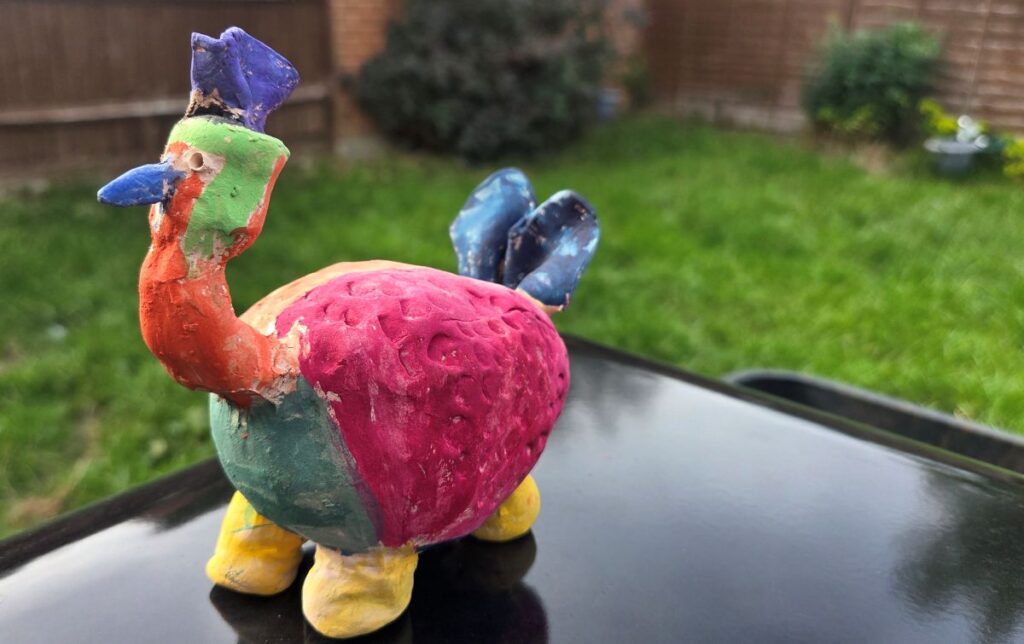
Art covers painting, drawing, clay work, theory and it produced a famous clay bird that now lives on our shelf.
History — essays, arguments and scissors
History feels more structured and exam-focused than the other subjects. Students write essays, make arguments and learn theory.
The one thing that caught me off guard was the notebook organisation. Sometimes Albert came home with loose A4 sheets or perforated pages that were either stuck into his notebook or attached using the string through the holes. Once, I spent an entire evening at the dining table with scissors and a glue stick trying to make it all look decent. I quite enjoyed it, but let’s keep that a secret.
Sports — a genuinely impressive range
One thing I appreciate about schools in England is how seriously sport is taken. Albert’s school offers athletics, football, volleyball, cricket, basketball, tennis, hockey and more throughout the year.
Pupils have P.E. twice a week and they have to follow a strict uniform policy, for example, the right sock colour and the right shoes. He almost got a detention because of this and if you are curious, you can read about it here.
Foreign Languages
Albert is learning Spanish. In Year 7, the approach starts with simple words, phrases and conversational language in the first and second person. Even though he studied French in primary school, Year 7 introduced Spanish to the curriculum.
I found it interesting that pupils are not given the option to choose their preferred foreign language to study. Well, I don’t mind. It looks like those summer holidays spent watching telenovelas came in handy.
Food Technology & Design Technology
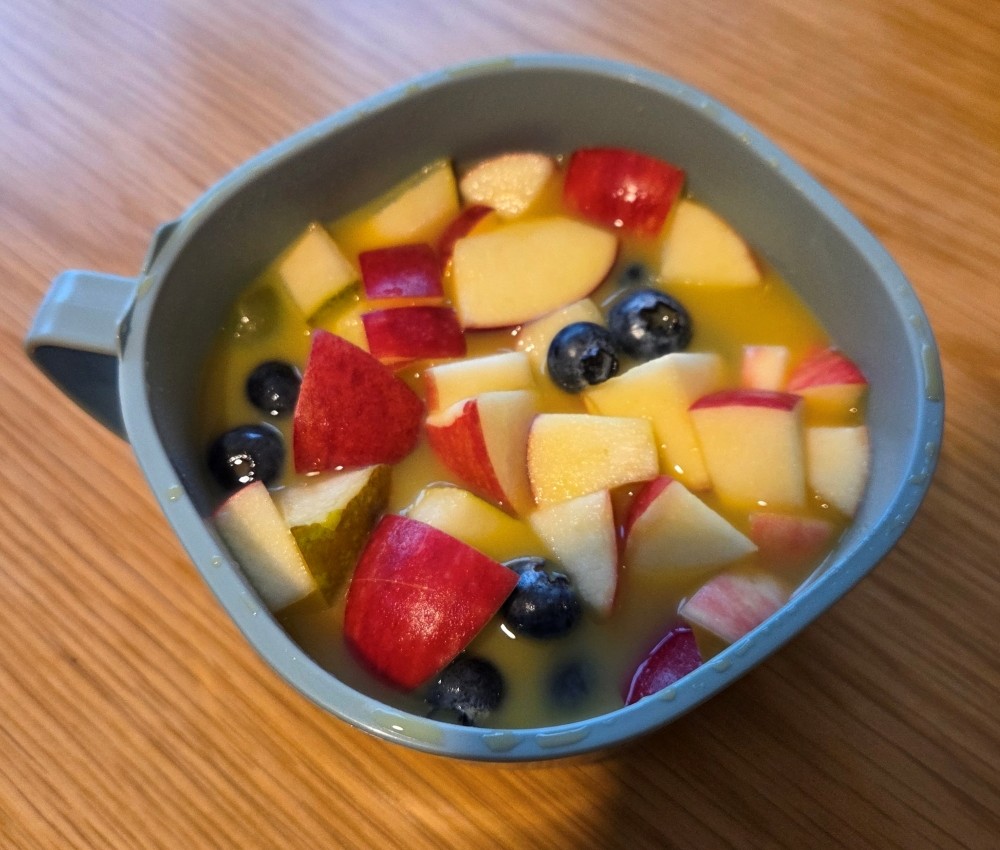
September started with a very nice surprise: Food Technology. This meant Albert came home carrying cakes he’d baked at school or fruit salad. I was so excited about this that I actually wrote an article, which you can read here. Spring brought Design Technology, which involves woodworking. My son is currently building a phone holder, and he is excited about the new project.
Geography — maps, volcanoes and the human footprint
Geography is a nice mix of practical and theory. Students learn to read maps and use coordinates and compasses, real navigation skills, alongside studying natural events like volcanoes, earthquakes and how human activity shapes the environment.
Religion and Philosophy
They are not two different subject, it is the name of the subject. This year they learned about different faiths and gods. I’ll be honest: I considered withdrawing Albert from this class at the start of the year, but everything is fine now.
Music
In Music lessons, children learn theory and play instruments. Currently, my son is playing the triangle.
Personal Development
Personal Development is one of the subjects that surprised me. It covers a wide range of topics that I did not expect, from ADHD to politics.
Drama — a proper stage
The school has a dedicated theatre room, a real stage with seating, where students rehearse and perform throughout the year. Wow!
When I first visited the school my son is currently attending, which was before he started year 7, I remember thinking: I would enjoy attending a few classes myself. A year in, I still feel that way.
Year 7 in England is structured, but not rigid. Apart from the online maths homework and the “never-seen” English notebook, I like it, but most importantly, my son likes it.
One of the reasons I was happy we moved to England was the school system, because I didn’t want my child to experience the same school-related stress that I did. I want him to gain knowledge, to learn, to read (reading is one of the things he loves) and to do his job, which in this case is to learn and do his homework. I want him to enjoy learning and see it as something positive and meaningful.
How different is your child’s school experience compared to what you remember from your own school years? Let me know your thoughts in the comments below.
photo source: unsplash.com
This is just one piece of our experience with school life in England and there is more to come. If you’re still here, I would love for you to subscribe. Join me below.
From England to Your Inbox
You may also like:
How I Saved My Son From School Detention
What Do Children Cook at School in England?
A Family Day Out in London: Our Favourite Stops
Visiting Oxford: A Day of History, Hidden Corners & Famous Sights

